Have companies really learnt how to use AI agents efficiently?

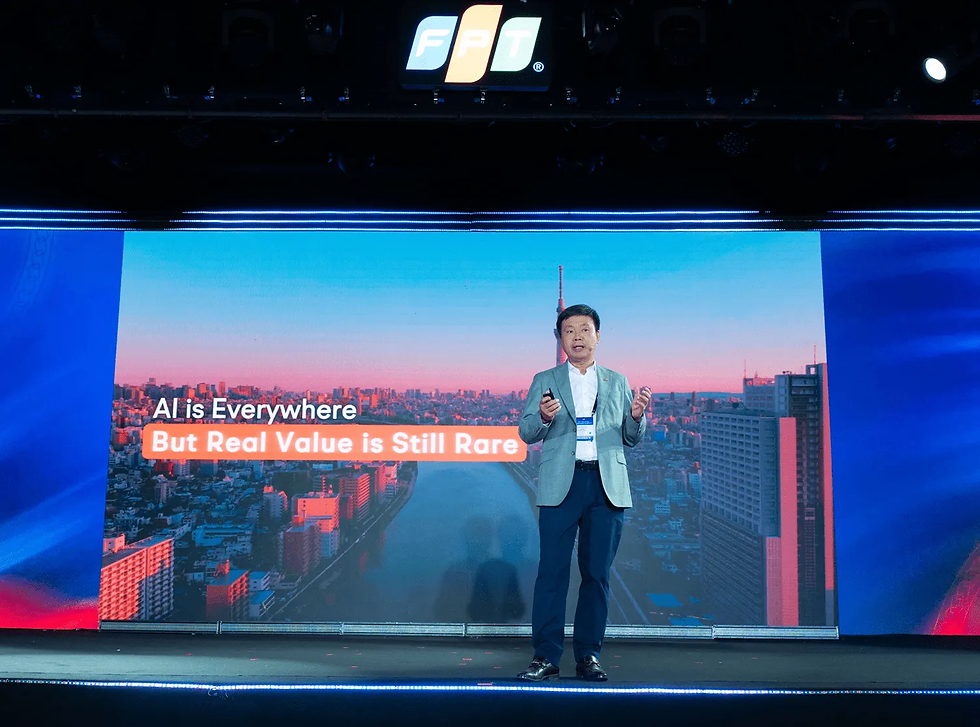
The latest global report, “From Pilots to Reusable Platforms: A Blueprint for Scaling Enterprise AI”, jointly conducted by FPT Group and Forrester Consulting on nearly four hundred of the world's most powerful tech minds, might sound a resounding alarm in the tech industry, or perhaps a pleasant tune depending on whether you're a shareholder or an employee. Artificial intelligence, from its infancy in the lab, is now confidently entering boardrooms under the new name of AI Agents, or autonomous assistants.
Imagine a beautiful morning, you walk into the office and realize that seventeen percent of your core tasks, ones that previously required hours of typing and tense frowns, are being smoothly handled by a formless entity that doesn't ask for a raise and never takes time off for heartbreak. The current seventeen percent figure, referring to empirical data showing how much AI agents are involved in core processes at surveyed businesses, is just the beginning of a large-scale rollout. Within the next year, this number is projected to jump to over a quarter, and in just two years, nearly forty percent of the operational lifelines of large corporations is expected to be in the hands of algorithms.
The motivations behind investment in AI are no secret. Nearly half of leaders admit they crave the ability to drastically reduce labor costs, and the rest are captivated by the machines' ability to read data and make decisions and instantly process unstructured analytics to drive faster executive decisions. Businesses are pouring more than five percent of their technology budgets into the bottomless pit of AI, hoping to transform their organizations into automated money-making machines where people can simply sit back, drink coffee, and press buttons.
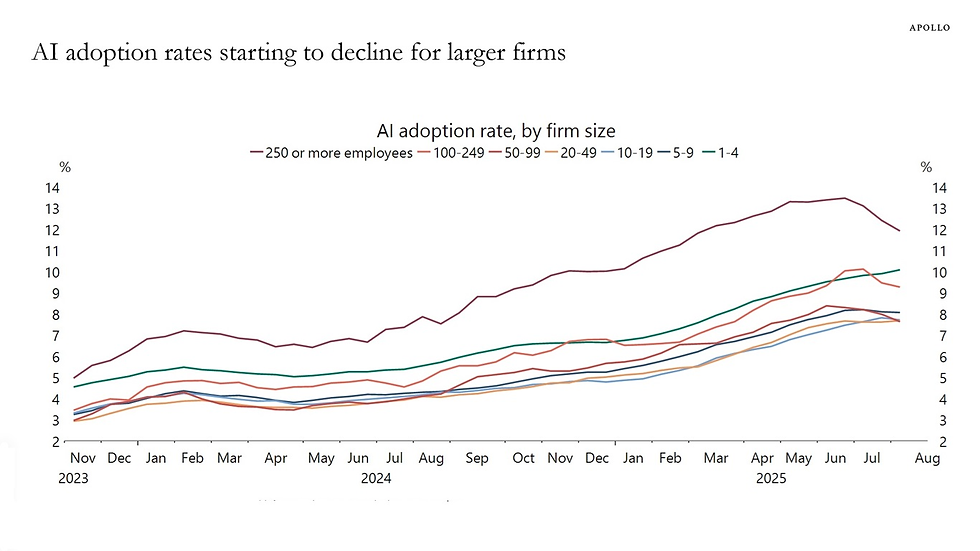
However, the gap between the dream of owning a robotic empire and the reality of its operation presents a significant barrier. More than half of businesses eagerly invest, yet only a quarter dare to consider themselves mature in using AI, which in this context means having end-to-end operational integration, robust data governance, continuous model monitoring, etc. Most organizations today are like people who buy a new supercar just to use it for their daily grocery shopping. They use the latest technologies to smooth out outdated processes from the previous century, instead of bravely tearing down and rebuilding their entire business structure. Old-fashioned thinking disguised in the guise of new technology ultimately only creates illusions of progress.
As AI agents begin to take deeper root in systems, the business world suddenly realizes that the biggest obstacle isn't how intelligent the computer is, but whether their outdated systems can integrate that intelligence. Over forty percent of tech leaders are scratching their heads, wondering how to fit a cutting-edge AI brain into a patchwork infrastructure built decades ago. Sparkling experimental projects in the lab suddenly become nightmares when trying to scale them across the entire organization. It's like trying to install a 2026 operating system on an outdated Windows 95 desktop computer.
Because of this mismatch, investment flows in the near future are undergoing a calculated shift. Businesses are no longer enthusiastically buying standalone AI software for show. Now, they are investing in building brakes and safeguards, from improving governance and legal compliance to strengthening data security.
Looking beyond the dry statistics of FPT and Forrester, the expedition of AI agents is presenting society with a philosophical survival question. With machines taking over nearly forty percent of core tasks, how will the definition of human labor be reshaped? For the younger generation and the community in general, AI is no longer a distant concept in science fiction films, but an entity potentially threatening job security. We are educating future generations to do jobs that, in just two years, an AI command could complete in milliseconds. To proactively address this educational gap, academic institutions and corporate training pipelines must transition from teaching static technical procedures to fostering higher-order critical thinking and system-level problem-solving.
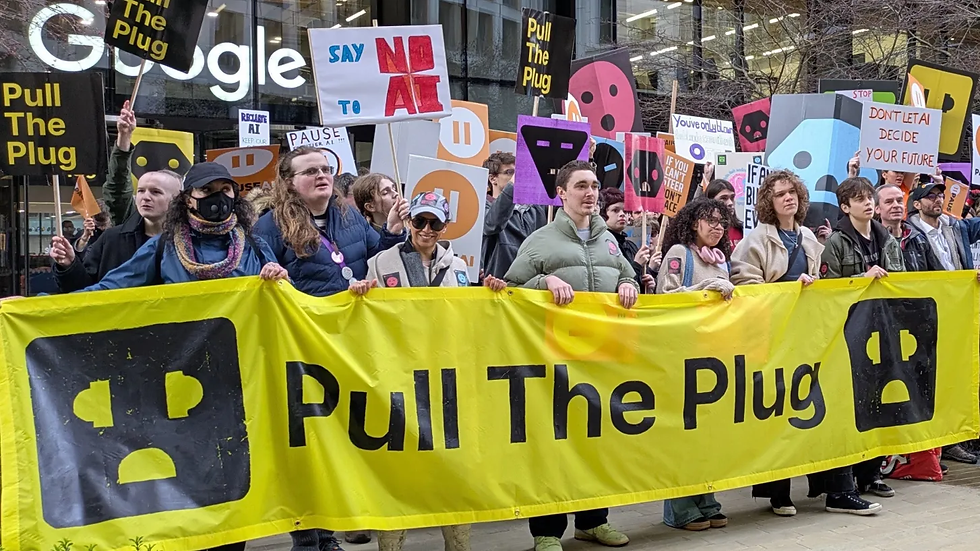
Rather than leaving students vulnerable to rapid displacement, educational frameworks can pivot toward cultivating human-centric oversight and creative architecture design, training the workforce to direct and manage intelligent systems rather than compete with them on pure execution speed.
The theoretical threat of AI displacement has rapidly materialized into a harsh corporate reality, as businesses deploy autonomous "agentic" AI to directly replace human workflows. We now see this fear made reality by companies like Klarna, which offloaded the work of 700 human agents to its AI assistant, and telecom giants like Verizon cutting thousands of roles after training the very AI systems that made them redundant. Rather than merely assisting human employees, these new agents are designed to operate independently, transforming routine execution and data processing into fully automated processes at a fraction of the cost.
However, this transition has been plagued by intense skepticism, with critics pointing to AI-washing AI-washing: a trend where companies use the AI hype as a convenient cover to justify aggressive cost-cutting and boost stock prices, even when the software still fails to handle complex, nuanced tasks. The most insidious long-term impact is not the dramatic mass layoffs, but silent attrition, where companies permanently freeze hiring for vacant entry-level roles and let AI absorb the workload. This creates a deeply worrying bottleneck for the younger generation, evaporating traditional career starting points and leaving the remaining workforce trapped as highly specialized artificial supervisors who must edit and validate machine output.
The rise of AI agents also exposes an ironic truth about so-called maximum efficiency. Unlike traditional lean management or workflow optimization strategies that focus on streamlining human collaboration and eliminating procedural waste, AI-driven efficiency thereby creates an ironic paradox where record-breaking corporate productivity coexists with mass employment reduction. Human society seems to be caught in a digital arms race, where businesses strive to become hyper-efficient entities while neglecting the human element. When core processes are fully automated, will the enormous profits generated be shared with the community, or will they be concentrated in the hands of a select few who own the algorithms? The shift from a human-centered society to an AI-centered society may bring numerical prosperity, but it will be profoundly impoverished in terms of human values.
Alongside hope, there obviously are concerns from human workers who see their livelihoods reduced to lines of redundant code in the name of corporate optimization. If we measure progress solely by processing speed and profit margins, we risk building an incredibly wealthy world where human purpose becomes the rarest commodity. The ultimate test of the AI era will not be how smart our systems become, but whether we have the collective wisdom to use that intelligence to elevate humanity rather than displace it.
When corporate leadership and policymakers actively integrate collective wisdom into their deployment strategies, they can steer automation away from exclusionary displacement and toward collaborative human-AI augmentation. This shared perspective ensures that technological breakthroughs actively preserve human dignity and distribute economic benefits equitably rather than concentrating wealth among an algorithmic elite.
Adapting to the wave of AI agents is no longer simply about learning to use a new tool, but about preparing mentally for what the future may hold, and how to adapt in response to a rapidly-accelerating technological scene.
Bình luận