Tackling the hardware bottleneck in autonomous AI

We're familiar with Gemini and ChatGPT, chatbots capable of smooth dialogue, coding, or even poetry. However, if we look deeper into the operational realities of businesses, these chatbots remain merely virtual assistants, only offering advice or drafting documents, while execution remains in the hands of humans. That's why a new wave is gradually reshaping the game: Agentic AI, which possesses complete autonomy to execute multi-step digital workflows end-to-end: such as independently gathering data across platforms, making operational decisions based on pre-set parameters, and executing complex software commands, and can operate efficiently on its own.
AI has transformed from a virtual assistant to a shape-maker

The technology industry is dramatically shifting from AI that can speak toward AI that can perform tasks. The core difference lies in autonomy. While traditional chatbots only respond after receiving commands from humans, autonomous AI, now exemplified by the open-source platform Openclaw, has the ability to act as both a brain and hands in the digital space.
Autonomous AI can automate web browsing, execute system commands, manage files, and coordinate messaging on applications like WhatsApp or Telegram without human intervention at every step. An agentic AI can browse thousands of rows of Excel data for you, filter important emails, and automatically set up a digital advertising campaign from start to finish. This is no longer just a support tool, but a replacement for a complete business process, which is by extension, the manual operational steps previously performed by human workers to keep those pipelines moving.
Office computers are being sidelined in the new era
The superiority of autonomous AI comes with extremely stringent technical requirements. To ensure millisecond response times as well as data security, systems like Openclaw are often deployed using a local-first model, which means the AI runs directly on the device instead of relying entirely on the cloud.
This is where the hardware challenge emerges as a major obstacle. A typical office processor, designed only for spreadsheets or web browsers, will quickly show signs of strain when simultaneously handling large model languages (LLM) and complex machine learning algorithms. Allowing AI to continuously read the screen, analyze image data, and execute continuous sequences of commands requires a high degree of specialized computing power. If the configuration is not powerful enough, users will face lag, clock speed drops, or worse, overheating and shutdowns while performing critical tasks.
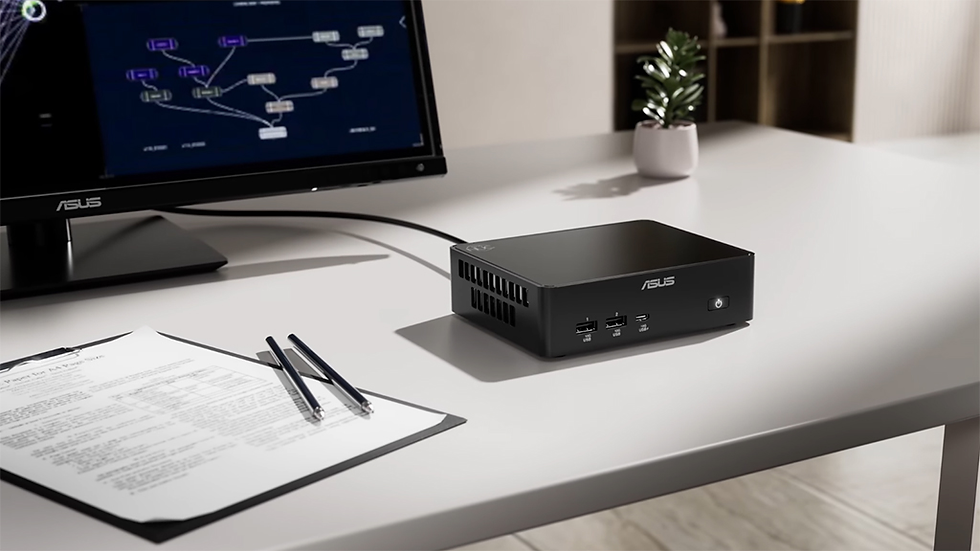
To meet this demand, computer models like the Asus NUC 16 Pro clearly demonstrate the inevitable direction of the future. With dedicated AI processing capabilities of up to 180 TOPS, coupled with an Intel Core Ultra X9 processor and Intel Arc B390 graphics card, this device is no longer just a personal computer. It is positioned as an AI processing center. The support from LPDDR5x RAM not only increases data transfer speeds but also optimizes power consumption – a crucial factor when the system needs to operate 24/7. Furthermore, the integration of dual-fan cooling and military-grade durability (MIL-STD 810H) shows that the manufacturer has considered the most extreme scenarios that an AI machine might face.
Are human boundaries becoming more blurred?
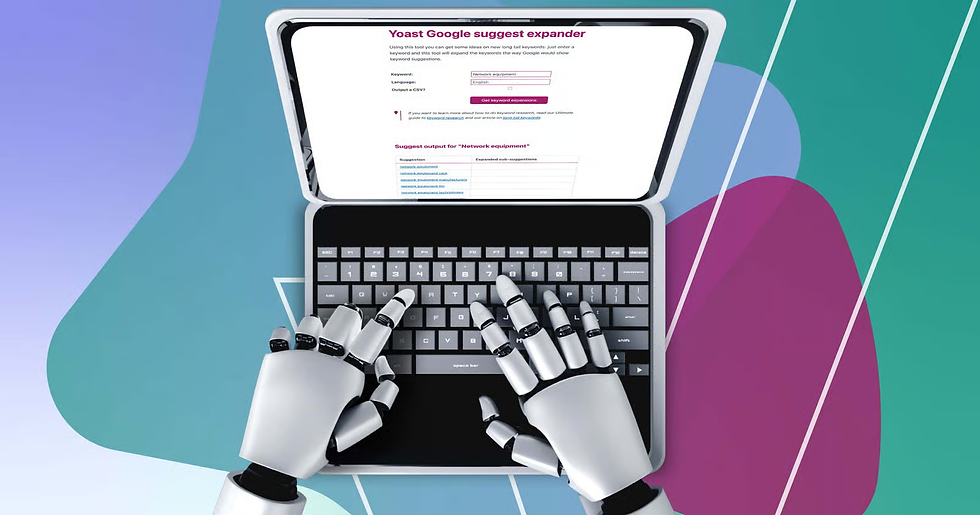
Broadly speaking, the shift from chatbots to autonomous AI is not just a technical milestone, but a turning point in business and personal management.
I believe we are entering an era where hardware capabilities will redefine everyone's competitiveness. Previously, an office worker only needed a laptop sufficient to open Word or Excel to work efficiently. But in the next two years, as autonomous AI becomes the standard in operational processes, those with more powerful hardware will have a significant advantage. They will be able to run more complex AI agents, process data on-premises instead of sending it to the cloud to ensure absolute security, and most importantly, they will not be interrupted by system latency limitations.
However, there is a paradox that needs to be discussed. We are striving to upgrade our hardware to support AI, but are we gradually losing the ability to work directly with it? If every task, from small to large, is performed automatically by AI, will the human brain gradually become passive? I believe that autonomous AI should be a power amplifier, not a filter that paralyzes thinking. If used correctly, autonomous AI will free humans from repetitive, mechanical tasks, allowing us time to focus on high-level strategic questions and creative ideas—such as redefining brand narratives during cultural shifts, architecting entirely new business models, or evaluating the long-term ethical implications of corporate expansions that even the most intelligent machines would struggle to reach.
Furthermore, the hardware challenge is a realistic reminder for businesses: Don't have illusions about deploying AI if your internal infrastructure is still outdated. Many companies want to use AI to take shortcuts but are afraid or unwilling to invest in computing infrastructure, leading to AI applications remaining at the experimental stage. The synergy between powerful autonomous software and matching hardware is the backbone for bringing AI from the lab into real life.
In short, the rise of autonomous AI, along with the need for hardware upgrades, signals that the technology is becoming more mature. Hardware is no longer a supporting element, but has become an essential consideration for effectively exploiting intelligent features. The future of each individual and business lies not only in which tools we use, but also in whether we possess the infrastructure powerful enough to master those tools. In this race, whoever controls computing power controls the speed of innovation.
Bình luận