The Global AI Race is Taking an Unforeseen New Turn

The battle for global AI supremacy is taking an unexpected turn. Right in the heart of Silicon Valley, a silent but decisive exodus is underway: American businesses are massively turning away from domestic giants in favor of cheaper AI models from China. As the initial hype subsides, the harsh realities of business, such as skyrocketing operational overhead, rapid capital depletion, and tightening corporate budgets, are forcing CEOs to weigh the pros and cons of grand promises for the future against a healthy balance sheet at the end of each month.
The Shift to the East
Last month, AI startup Lindy made a bold decision to shift all traffic from Anthropic's super-premium Claude model to DeepSeek, a Chinese startup that had previously caused a global sensation by upending cost-to-performance expectations across the industry and triggering widespread market disruption. "We did that and saw the cost curve go down, almost straight to the bottom," shared Flo Crivello, CEO of Lindy. This migration is expected to save the company millions of dollars in budget over the next few months.
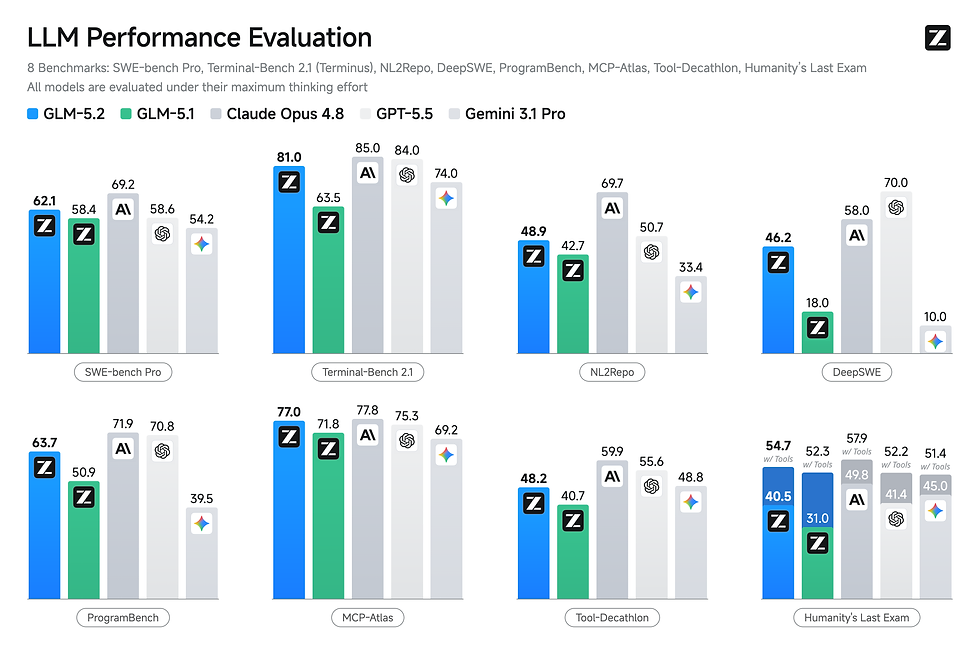
Lindy isn't alone; cryptocurrency giant Coinbase also recently announced it has cut its AI operating costs by nearly half thanks to integrating cheaper models from the East, notably Z.ai's GLM-5.2 (Zhipu AI) and Moonshot AI's Kimi.
Data from the OpenRouter platform shows a rift slowly emerging too: the percentage of tokens US businesses are paying for Chinese AI models has consistently remained above 30% per week since the beginning of February this year, at times soaring to 46%. Compare this to the average of only 4.5% in the first half of last year to see just how rapid the turnaround is for US businesses.
Even giants with seemingly unlimited financial resources like Uber, Microsoft, and Tesla are struggling to find ways to tighten their belts. Praveen Neppalli Naga, Chief Technology Officer at Uber, admitted they had spent their entire 2026 AI budget in just the first few months of the year because the cost of high-end programming tools like Claude Code was rising too rapidly. At Tesla, Elon Musk had to set a strict limit by capping each employee's spending on AI tools at $200 to curb reckless spending.
America is the pioneer, but China is the bigger beneficiary
Budget constraints have spawned a generation of highly pragmatic programmers, UX designers, and even vibe coders. They've started playing both sides: assigning extremely difficult tasks requiring superior reasoning skills to expensive, proprietary US models, and pushing all the easy, repetitive tasks onto low-cost but open-source Chinese models.
The rise of Chinese AI is no longer just a story of cheap imitations. According to data from Hugging Face, models from the world's most populous nation account for nearly half of all open-source AI downloads globally. Experts estimate that, despite being 60% to 90% cheaper than products from OpenAI or Anthropic, Chinese models are now only about 6 to 9 months behind their US counterparts when evaluated across standard capability benchmarks, reasoning tasks, and coding proficiency metrics.
For example, GLM 5.2, in standardized tests, only falls behind Anthropic's Opus 4.8 by 1% , yet costs one-fifth as much.. For a business facing survival pressure, that 1% performance gap is insignificant compared to the massive 80% cost savings.
When harsh reality tears through Silicon Valley’s illusions

As cold-hearted as my opinion may sound to some, I genuinely see this massive exodus as a painful but necessary wake-up call in response to Silicon Valley's arrogance and the illusions that American AI giants have painted for years. This premium positioning assumes that bleeding-edge proprietary technology is inherently immune to market gravity, an arrogant stance that luxury pricing models can indefinitely override fundamental cost-efficiency pressures. Many Western companies have become accustomed to selling grand visions and proprietary models at exorbitant prices with the assumption that businesses will pay any price to obtain the best artificial intelligence. But they have forgotten a fundamental rule for survival in the business world: financial efficiency is what attracts customers, and certainly not just breakthroughs or far-fetched promises that those companies aren’t even certain of completing.
In the frenzy of multi-billion dollar funding rounds, American engineers seem to have forgotten that their customers don't operate based on theoretical benchmark tests, but with actual cash flow in mind. Pricing products based on the assumption of highly prohibitive barriers to entry created a huge cost bubble, and now they’re paying the price with that bubble deflating due to the market's minimalist pragmatism.
The emergence of top-tier open-source models from China has exposed a harsh truth, and it’s that the vast majority of our everyday business tasks don't require a godlike superintelligence. We don't need a thousand-dollar Einstein brain just to sort emails, label data, or fix a few basic lines of code. The fact that American businesses are adopting Chinese models on their servers to overcome security hurdles demonstrates that even political fears or technological biases can be disregarded by shareholders if long-term profits are secured.
It reflects a new chapter in brutal pragmatism. When faced with the choice between complying with vague political security recommendations and salvaging a sliding profit margin, CEOs know which side to lean toward. The essence of technology is solving performance problems, and when geopolitical barriers are broken down by cost savings of up to 90%, that's when the free market speaks.
OpenAI and Anthropic should now wake up from their dreams of gaining more customers just because the technology is being developed faster. While Chinese startups like DeepSeek and Moonshot AI are pouring their energy into the cost and performance optimization battle, American giants are falling into a path of luxury, continuously launching more expensive and resource-intensive products like Claude Code to dominate the ecosystem. They are transforming themselves into Michelin-starred luxury restaurants for the super-rich, thereby leaving the vast but affordable market segment to their Eastern competitors.
History has provided a costly lesson that superior technology does not always guarantee economic victory. Take, for instance, the Great Video Game Crash of 1983, where market leaders relied on closed ecosystems, oversaturated store shelves with rushed software, and enforced restrictive licensing fees that alienated independent developers. At that time, the market was flooded with consoles featuring supposedly groundbreaking technology, yet they were suffocated by poor user experiences and suffocated by poor user experiences and illogical business strategies. Manufacturers had forgotten that consumers crave tangible value rather than flashy specifications. Today, America’s obsession with all-purpose closed-source models is only making its companies isolated, like building walls around expensive sandcastles, while its Eastern rivals quietly spread their infrastructure across the board with flexible and accessible open-source solutions.
Now, the race among tech companies is no longer about who can build the smartest model in the lab, but who can integrate AI into real-world operations most cost-effectively. If American tech companies refuse to relinquish their throne of grand technological illusions and address basic customer needs, they will soon realize that despite possessing the world's most brilliant computing minds, no one has the money to hire them. The ultimate power of a technology lies not in how deeply it can solve profound philosophical problems, but in how much it can optimize the operating costs of a grocery store, a bank branch, or a production line in the real world.
Bình luận